
SYNECT
Data management and collaboration software for automated ECU testing
SYNECT is a data management and collaboration tool with a focus on the efficient and automated verification and validation of ECU (electronic control unit) software.
-
SYNECT 2022-B
The latest SYNECT version offers, for example, improvements for customer-specific review extensions as well as a further optimized GUI framework.
-
Test Environment for Safety-Critical Driver Assistance Systems
The central management of the Euro NCAP test protocols and the provided tests in SYNECT Test Management allows for a seamless testing process.
-
Requirements-Based Testing: Properly Connected?
With SYNECT Test Management, dSPACE provides a solution for implementing an efficient requirements-based testing process that both bridges the gap to the requirements world and establishes a connection to the various test tools and test environments.
-
Increasing the Efficiency of SIL and HIL Tests by Using a Central Data Management System
This paper shows which challenges the aerospace industry currently faces regarding the efficient reuse of workflow artefacts in the development and test process of complex E/E systems.
-
Toyota: Automated Rolling
To automate its mechanical test benches, Toyota relies on a combination of AutomationDesk and SYNECT.
-
PATAC: Automatic Safety
Tests for autonomous driving based on SOTIF
Read More
-
Daimler: Powertrain Tests at the Push of a Button
To quickly and safely create model integration versions, for example, for testing new powertrains, HIL simulator farms can be equipped with workflow automation that is based on the dSPACE data management software SYNECT.
-
Learning Connection Video: Lifecycle Traceability with SYNECT and codebeamer ALM
In this video, Intland and dSPACE demonstrate the direct integration of codebeamer in SYNECT. codebeamer and SYNECT users benefit from end-to-end traceability and a convenient way to plan and automate SIL and HIL validation tasks.
-
Recording of Online Workshop: Early Software Validation: Techniques and Standards
Collaborative ways to develop, manage and execute tests, and how to create and validate an ISO 26262 compliant software unit in 1 hour
-
Webinar Recording: Variant-Based Testing with HIL Systems – The Elegant way
In this webinar recording, dSPACE shows you how HIL systems can be automatically prepared and used for testing different ECU versions and variants to achieve the best possible testing efficiency.
- Manage and automate testing
- Automate HIL testing and achieve more efficient HIL utilization
- Establish full traceability from requirements to test results
Managing complex data safely, efficiently and centrally.
Application Areas
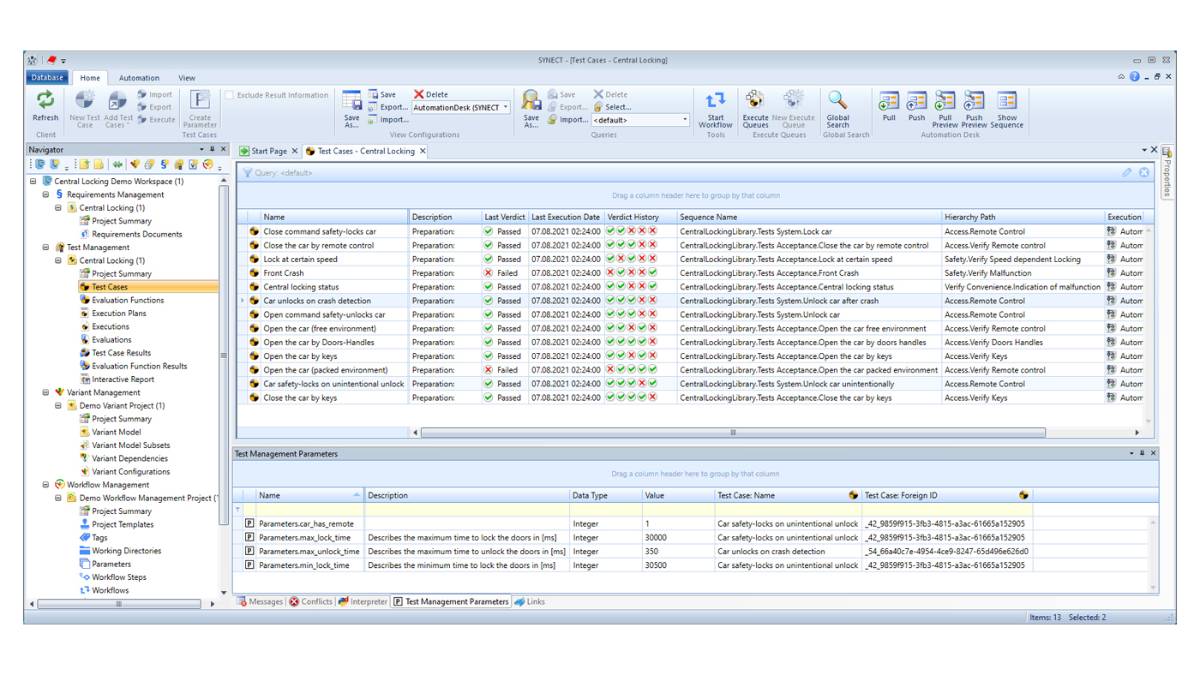
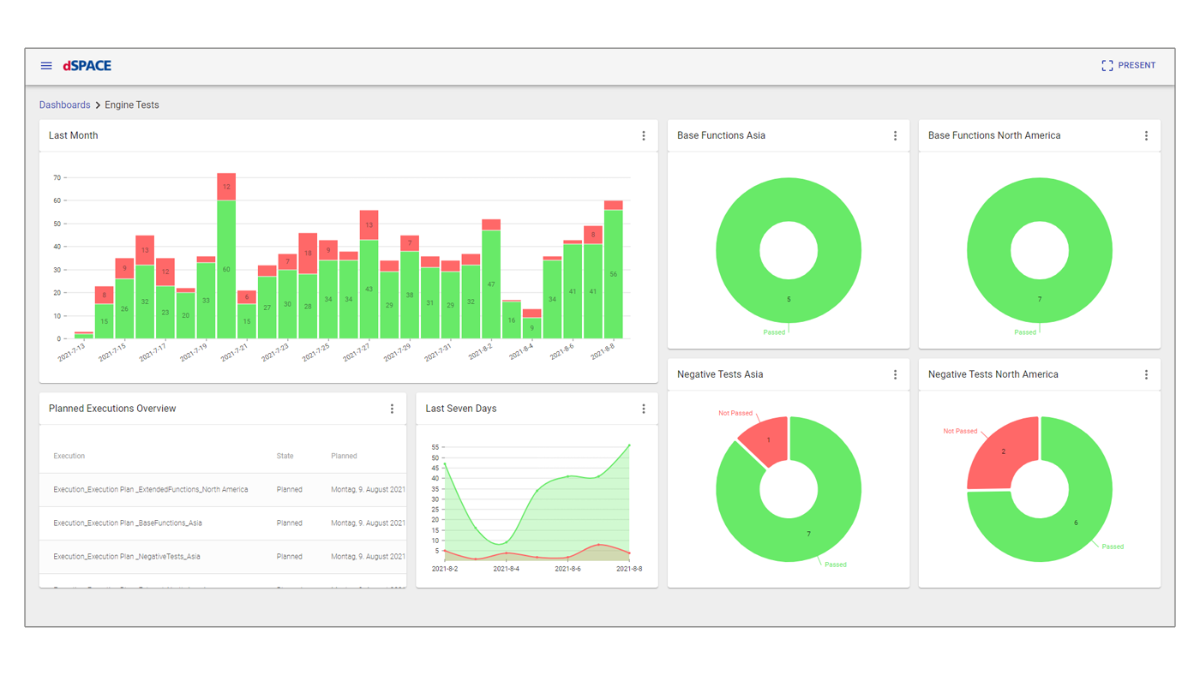
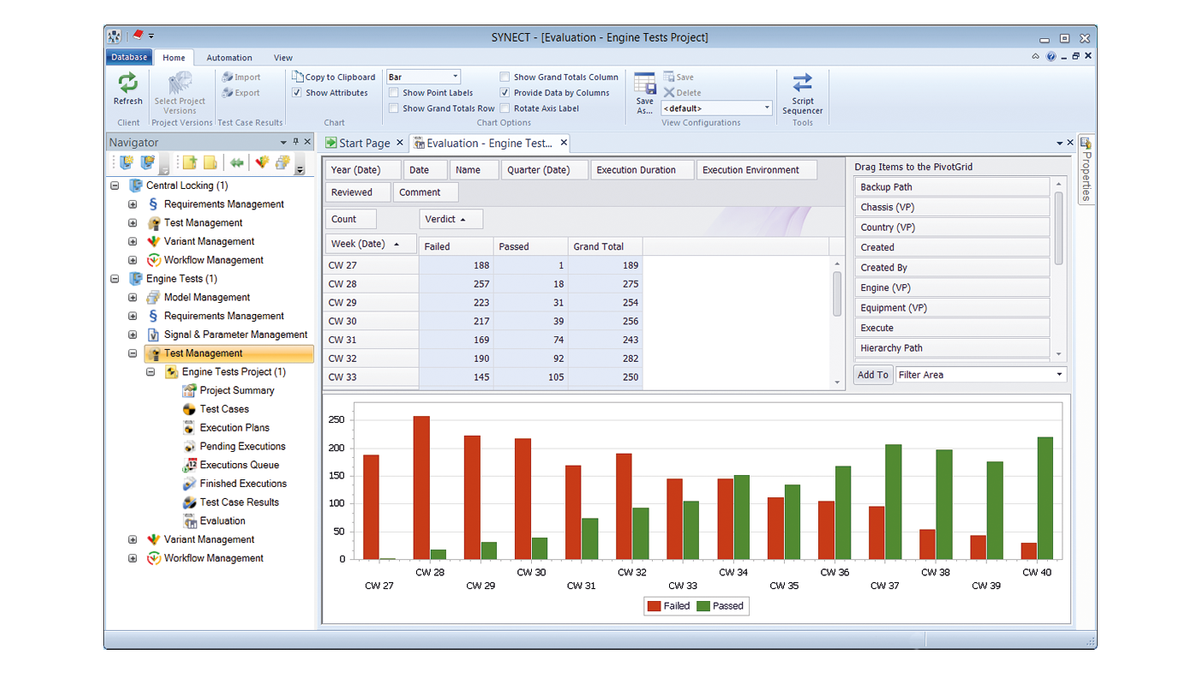
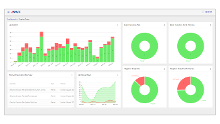
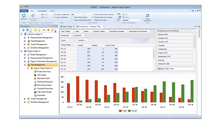
SYNECT helps you manage and automate testing in local as well as globally distributed teams and connects management processes, actual test work, and tools. SYNECT provides full traceability from requirements to test results. Powerful monitoring options, such as reports or dashboards, visualize the test status and progress. With its integrated variant management, SYNECT provides a systematic and transparent approach for testing ECU variants and versions.
SYNECT furthermore automates test system setup, including HIL preparation and build processes, and enables agile development by supporting continuous testing. Using SYNECT will help you set up 24/7 testing and optimize HIL utilization.
Key Benefits
SYNECT enables collaboration and automation for ECU testing.
- Automate HIL testing and achieve more efficient HIL utilization
- Introduce model-in-the-loop (MIL) and software-in-the-loop (SIL) testing using the same tools and workflows as for HIL testing
- Establish full traceability from requirements to test results
- Integrate with ALM tools and processes to bridge the gap to actual test execution
- Monitor the test progress with customizable dashboards and comprehensive reports
| Module | Description |
|---|---|
| SYNECT Base |
SYNECT module for working with multiple clients on a common server, including user and rights management |
| SYNECT Test Management – Planning & Execution | SYNECT module for test planning, scheduling, and execution |
| SYNECT Test Management – Test Development | SYNECT module for test case development and parameterization |
| SYNECT Model Management | SYNECT module for managing models, their interfaces, parameters, and related files |
| SYNECT Variant Management | SYNECT module for defining and managing variants as well as their impact on design and development data |
| SYNECT Workflow Management | SYNECT module for automatic test system setup, i.e., for HIL simulation and modeling, by means of workflow creation Tool for continuous integration, from autocode generation to SIL and HIL simulation. Support for variant and parameter handling in highly complex build and test environments |
| Workflow Runner Package Required for SYNECT Workflow Management |
Starter/Runner package manages the execution of workflows via the Starter user interface, automated jobs, MATLAB® or Python API Lets you start a custom workflow, e.g., to start dSPACE ControlDesk with the experiment associated with the selected variant configuration |
| Workflow Management Connector Package Required for SYNECT Workflow Management |
Manages the connection between SYNECT and other dSPACE or third-party tools required for automatic test system preparation Handles connections to ConfigurationDesk, AutomationDesk, ControlDesk, ModelDesk, and MATLAB®/Simulink® |
| SYNECT AUD Test Authoring Framework (TAF) | SYNECT-based test authoring and automated test execution with AutomationDesk |
- dSPACE Consulting Creating ideal processes for all development phases and the validation of ECU software
- Test Data Management Handling models, signals, parameters, tests, versions and variants, and requirements throughout the entire development process.
- HIL Testing for Electronic Control Units (ECU) Benefit from our Hardware-in-the-Loop ECU Testing with end-to-end toolchains for reproducible testing of perception systems, software and control algorithms under real world conditions.
- SIL Testing Software-in-the loop (SIL) testing with the powerful dSPACE solution for PC- and cloud-based simulation
Drive innovation forward. Always on the pulse of technology development.
Subscribe to our expert knowledge. Learn from our successful project examples. Keep up to date on simulation and validation. Subscribe to/manage dSPACE direct and aerospace & defense now.