Urban air mobility (UAM), also known as advanced air mobility (AAM), aims to relieve urban congestion by shifting parts of passenger and freight transportation into the air. The use of electric Vertical Take-Off and Landing (eVTOL) aircraft could be one technical solution. However, this presents new challenges, not only when it comes to battery or fuel cell capacity and power consumption, but also in ensuring safety and reliability of the electric propulsion system itself.
Task: Test electric propulsion under realistic conditions
Electric drivetrain components for eVTOL aircraft must be validated under conditions that closely resemble real flight scenarios. These conditions include highly dynamic load profiles, rapid transitions between flight phases, and varying environmental conditions.
To perform dynamometer-based testing of electric motors and inverters, a dedicated test bench is required, enabling engineers to analyze system behavior under controlled, repeatable conditions.

Challenge: Capture highly dynamic system behavior
eVTOL propulsion systems must meet a wide range of demanding requirements (Figure 1), including:
- Safe and stable transition between vertical and horizontal flight
- Rapid torque and speed changes during take-off and landing
- Efficient continuous operation during cruise flight
- Tight interaction between the battery, inverter, motor, and thermal management
- Reliable performance under varying environmental conditions
- Compliance with stringent aviation certification standards
To accurately simulate these scenarios, test environments must apply precisely defined load profiles across a broad operating range. At the same time, a wide set of parameters, including torque, speed, voltage, current, and efficiency, must be measured with high accuracy and resolution.
This requires a flexible, scalable test system that can reproduce highly dynamic behavior and capture detailed system responses
Solution: Real-time test bench control with SCALEXIO
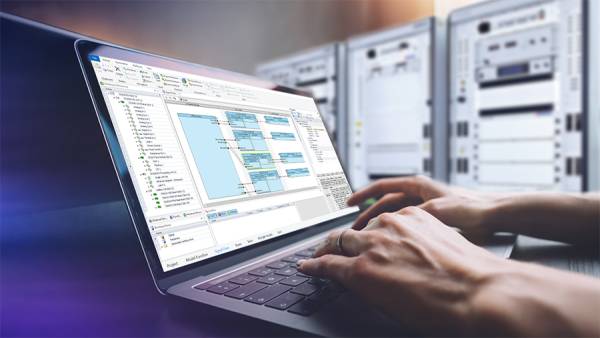
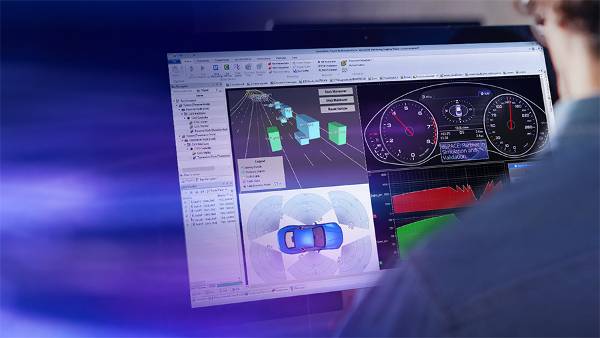
A dSPACE solution based on the SCALEXIO real-time system enables precise and deterministic control of the test bench. The system communicates with key components, such as the precharge unit and inverter, via CAN communication. All test scenarios are configured, monitored, and analyzed using the comprehensive graphical user interface of ControlDesk for experiment control.
Key capabilities include:
- Real-time control of dynamic load profiles
- Seamless integration of drivetrain components
- High-resolution acquisition of measurement data
- Intuitive visualization and analysis of system behavior
- Scalable setup for different test configurations
The combination of SCALEXIO and ControlDesk allows engineers to perform realistic, repeatable, and highly dynamic testing of electric propulsion systems. Leveraging AutomationDesk or the Test Automation SDK allows for the efficient automation of test sequences, ensuring consistent execution and comprehensive test coverage.
This supports:
- Faster development cycles
- Improved system understanding
- Reduced risk during certification
- Increased confidence in safety and reliability