What is HIL Testing?
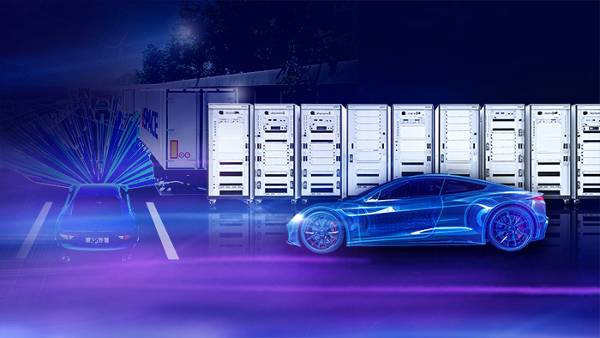
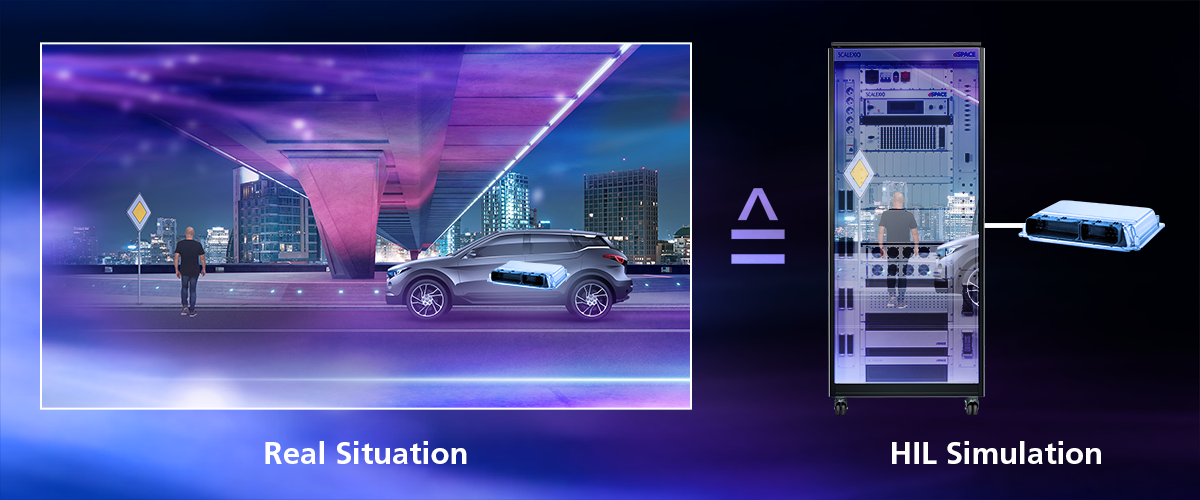
Hardware-in-the-loop (HIL) testing means the tests of real ECUs (electronic control units) in a realistic simulated environment. These hardware-in-the-loop simulation tests are reproducible and can be automated which leads to 24/7 comprehensive testing in the laboratory, shortens validation times, and increases the range of HIL test scenarios. Additionally testing critical corner cases on a HIL test bench can be done without creating safety problems for the device-under-test or the environment.
Advantages of HIL Testing
- HIL test systems scalable from small to large
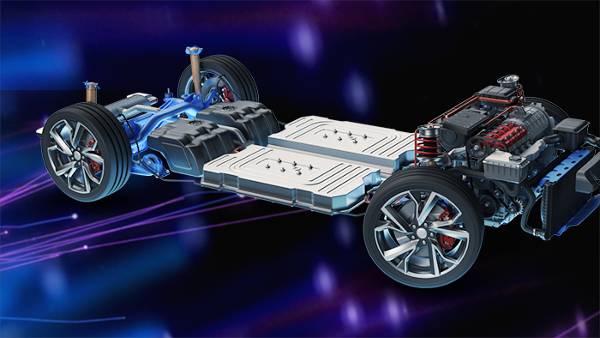
- Hardware-in-the-loop simulation of the complete vehicle or integration of real components
- Communication testing
- Bus and restbus simulation
What our customers say
Thanks to the cross-component dSPACE HIL system, we were able to test the mechanical components such as the steering and brakes in direct interaction with the sensors to check that everything worked together correctly. The unbeatable advantage of the dSPACE solutions was their absolute time synchronization and fully closed-loop setup.

The first software release for the FCU was functional very quickly, because of the numerous preliminary tests we did on the HIL system. We were able to check not only all the basic I/O, but also the closed-loop control loops to make sure that our software worked before we put it on a real system.

In my opinion, dSPACE provides some of the best HIL hardware and software in the market. Overall, I'm very happy with the HIL system and how it has helped us improve our software testing capabilities.


Typical HIL Test System
A HIL test system comprises of the simulation hardware and the accompanying software. Connected to the HIL test system is the unit under test, which usually is one or more electronic control units (ECUs) containing new functions or ECU software to be tested. Depending on the use case, further real hardware components can be added to the test system, e.g., steering or the brake system.

Test Management

Platform and I/O Configuration


Experimentation and Visualization


Test Automation

HIL Real-Time and I/O Hardware


Simulation Model


Deep Dive – Test Phases and Test Systems in HIL Simulations

Function Testing
Function testing focuses on testing single or a few functions, including their interaction with ECU basic software. Since this kind of testing is typically an integral part of function development rather than final release testing, its focus lies on experimental usage, without systematic test automation. Hardware-in-the-loop (HIL) test systems for function testing therefore require versatile bus and network interfaces, restbus simulation on the behavior and protocol levels, or design-for-test interfaces (e.g., XCP). These types of tests are often performed by the function developers themselves and must fit on a developer’s desk.

ECU Component Testing
Typical applications for ECU tests range from software integration testing through fail-safe and fail-operational testing, to ECU release testing. Testing is therefore highly automated and based on ECU requirements to cover the high number of variants.
Test systems for ECU testing require scalable I/O and bus/network interfaces including electrical failure simulation. Furthermore, testing of buses and networks requires restbus simulation on the behavior and protocol level as well as extensive manipulation.
Testing of real components requires comprehensive plant models and simulation performance that can be increased accordingly. Ideally, the test system functions can be adapted to changing project requirements.

ECU Domain and Network Testing
ECU domain and network testing is characterized by end-to-end testing of distributed functions. This includes sleep or wake-up tests as well as fail-safe and fail-operational tests of the vehicle’s ECU network. The need for an extensive range of I/O channels as well as bus and network interfaces is characteristic for these kinds of test systems.
A multitude of plant models must be processed time-synchronously on several clustered real-time systems. To handle complex models and scenarios, strong simulation performance and multiprocessor capabilities are required.
ECU network testing systems often run highly automated test programs around the clock, made possible by comprehensive test management systems.
Specialized Topics
Validation of Safe and Secure Bus and Network Communication
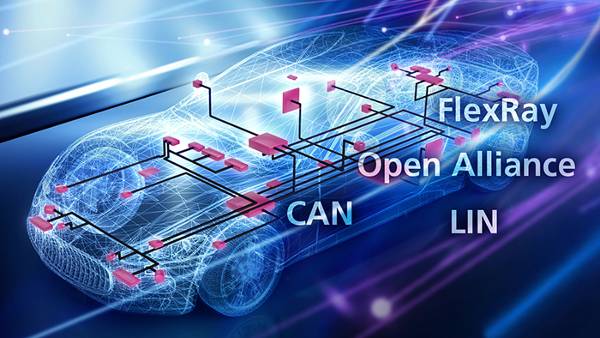
Validating in-vehicle communication networks is crucial for the HIL testing of distributed automotive systems. dSPACE provides comprehensive solutions for simulating and analyzing bus systems like CAN FD, LIN, FlexRay, and Automotive Ethernet, along with higher-level protocols. These solutions support complete restbus simulation, gateway functionalities, and fault injection, enabling verification of ECU communication behavior under real-time conditions. Integrated tools offer precise timing analysis, signal manipulation, and simulation of safety and security mechanisms, as well as ensuring functional correctness and compliance with OEM specifications and industry standards.
Automotive cybersecurity regulations and standards require the protection of the vehicle’s components against external threats by securing the communication between them. This is realized by using security protocols on bus and network level, such as SecOC, MACsec, IPsec, and (d)TLS. During the development of vehicles and their electronic control units, sufficient testing of the implemented countermeasures must be performed to validate the cybersecurity goals.
dSPACE HIL test systems are well-suited for conducting the following types of cybersecurity test:
- Functional and conformance testing of the implemented security mechanisms according to their specifications, including safety-security dependency testing.
- Fuzzing and penetration testing: explorative testing to minimize unidentified weaknesses and vulnerabilities, validate cybersecurity goals, and confirm that no unreasonable risk remains.


Realistic Validation with VIL and HIL
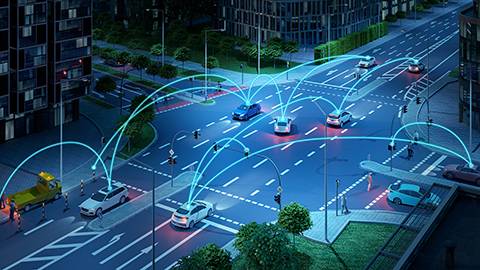
Vehicle-in-the-Loop (VIL) testing enhances Hardware-in-the-Loop (HIL) setups by adding real-world dynamics to digital validation. VIL makes it possible to test a complete vehicle with regards to its driver assistance/automated driving systems (ADAS/ADS) by simulating the driving environment and scenarios in real time and stimulating the sensors relevant for ADAS. ADAS-VIL tests are a special case of ADAS-HIL tests. In this case, the “hardware” in the loop is the complete vehicle.


Application Areas
The dSPACE HIL systems are suitable for a wide range of application areas, from automotive topics to aerospace to railway and marine.