Shared Data Interface: Simple. Fast. Future-Proof.
- HIL-Tests
15:45min

Übersicht
In modern HIL projects, complexity and data volumes are skyrocketing - traditional port-mapping approaches reach their limits: long configuration times, performance losses, and a lack of support for complex data structures.
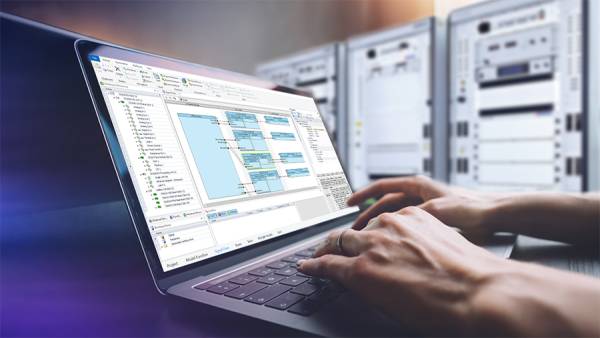
The solution? The new shared data interface (SDI). Instead of cumbersome port mapping, Simulink models and bus configurations now access a shared data structure directly. This means faster simulations, easy integration, and full support for complex signals - regardless of the bus system.
In the video, Mateusz and Marvin demonstrate in a practical way how SDI works: from creating the bus configuration in Bus Manager to the model implementation in MATLAB/Simulink and establishing the final connection - all with minimal manual mapping. You’ll learn how SDI accelerates your workflows, decouples teams, and enables scalability for large multi-ECU projects.
The bottom line: Less effort, improved performance, and a new approach that’s ready for the future. Check it out and see for yourself!
Gastgeber

Mateusz Urban
Product Manager ConfigurationDesk, dSPACE GmbH

Marvin Stute
Product Engineer, Network & Bus Management, dSPACE
FAQ
Q1: Was genau ist das Shared Data Interface (SDI)?
A1: SDI ist eine zentrale Datenstruktur, auf die Simulink-Modelle und Buskonfigurationen direkt zugreifen. Dadurch entfallen manuelle Port-Zuordnungen, was zu einer besseren Laufzeitleistung sowie zu einem stärker entkoppelten Arbeitsablauf führt.
Q2: Welche Probleme löst SDI?
A2: Klassische Ansätze bremsen bei großen Modellen: Performance-Verlust, hohe Komplexität und fehlende Unterstützung für komplexe Datentypen. SDI beseitigt diese Hindernisse.
Q3: Unterstützt SDI komplexe Datenstrukturen?
A3: Ja! Ob Arrays oder mehrdimensionale Datentypen – SDI ist für moderne Fahrzeugstrukturen und zonale Architekturen gerüstet.
Q4: Ist SDI kompliziert zu integrieren?
A4: Nein. Dank des neuen SDI-Ansatzes ist die Erstellung der Kommunikation einfach: Sie importieren die Schnittstelle in Simulink und können direkt loslegen – mit minimalem manuellen Mapping.
Q5: Für welche Protokolle funktioniert SDI?
A5: SDI ist derzeit in ConfigurationDesk für CAN und LIN verfügbar. Die Unterstützung für Ethernet und FlexRay wird in Kürze folgen.
In Zukunft werden wir mit unserem SDI-Ansatz auch die Kommunikation zwischen Modellen, Multi-Core- und Multi-Prozessor-Anwendungen sowie die SIL-HIL-Kontinuität unterstützen.